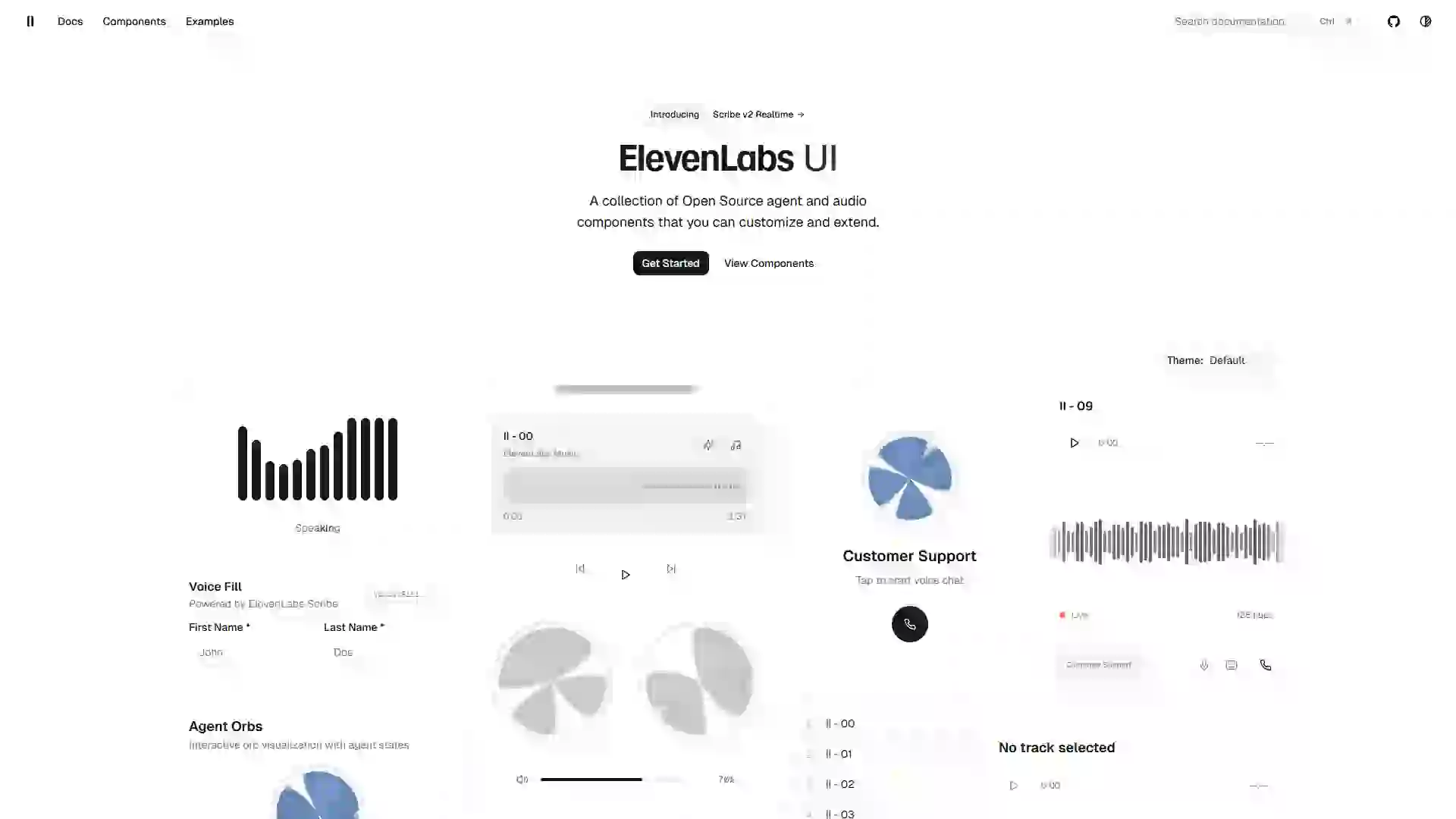
Elevenlabs
Elevenlabs Summary Elevenlabs offers an open-source library of AI agents and audio components that developers can freely customize and extend to build voice-interactive applications. Features High-quality, multilingual text-to-speech synthesis core with natural, lifelike voices. Open-source design allows deep customization of models, voices, and features for maximum flexibility. Includes pre-built voice-agent components that accelerate the development of conversational AI apps. Real-time voice generation and streaming support for low-latency interaction scenarios. Use Cases Integrating custom voice assistants or narration into games, apps, or services. Experimenting with or extending speech-AI technology for research and development. Producing audio content, podcasts, or videos that need efficient, multi-style, multi-language voice generation. Drawbacks As a developer tool, it requires programming and technical background; not friendly to non-technical users. The open-source version may demand manual environment setup and compute provisioning, raising deployment barriers.
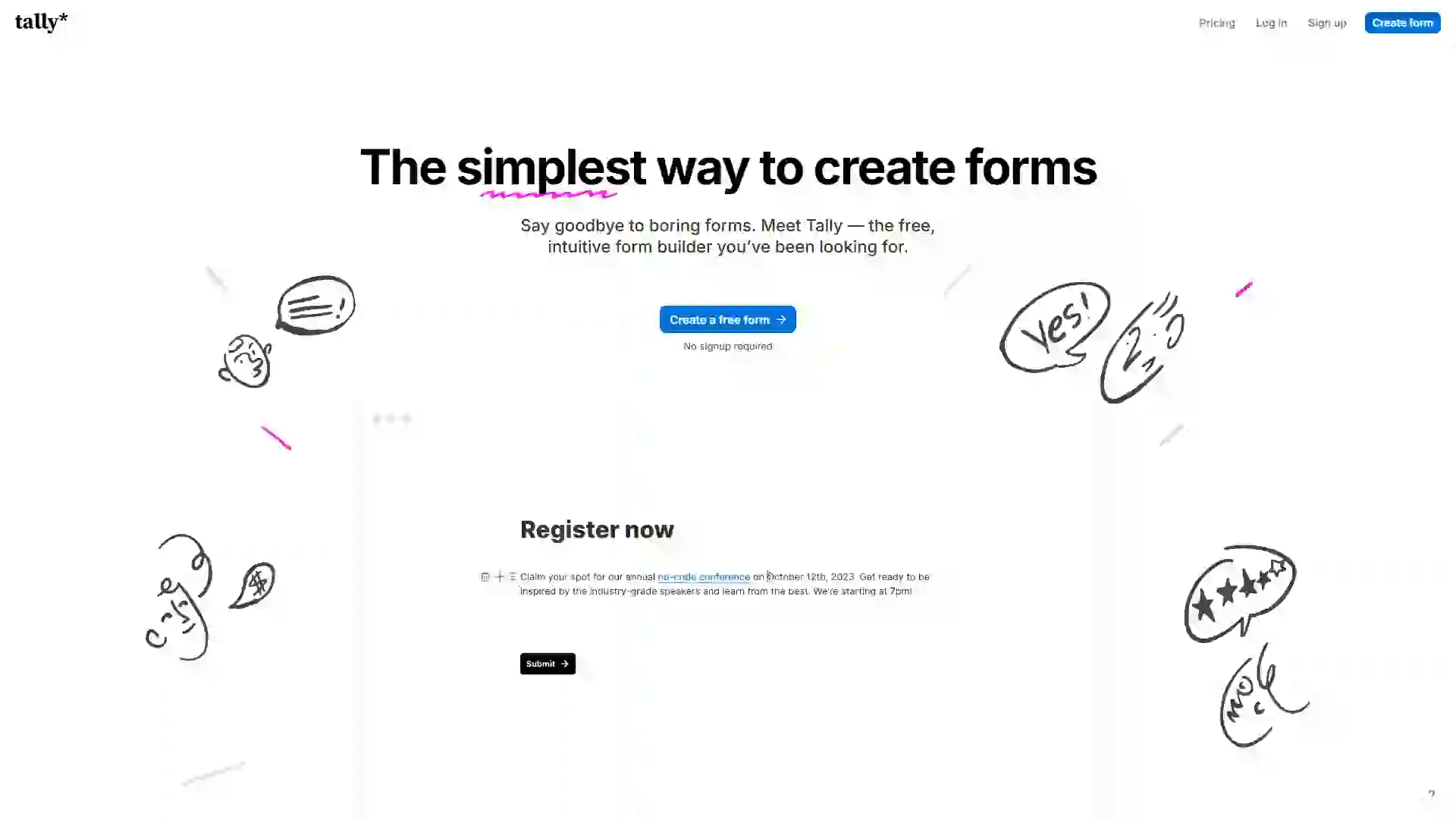
Tally
Tally Summary Tally is a free, intuitive, and powerful online form builder designed to make creating any kind of form quick and easy—leaving the dull experience of traditional forms behind. Features Completely free core features: unlimited forms, unlimited fields, and unlimited submissions—no payment required for individuals or small teams. Maximum ease of use & design: a drag-and-drop editor plus rich templates let you craft beautiful, professional forms in minutes. Strong customization & integrations: custom domains, brand colors, and seamless connections to hundreds of popular tools. Flexible conditional logic: dynamically show or skip questions based on user answers to boost form efficiency. Privacy & data security first: EU hosting options, data encryption, and full compliance with GDPR and other data-protection regulations. Use Cases Market research & customer feedback: spin up surveys, NPS scorecards, or product-feedback forms to understand users better. Event management & registration: handle sign-ups for online/offline events, collect attendee info, and capture preferences. Content creation & lead generation: embed forms to gather newsletter subscribers, course applicants, or product-inquiry leads. Internal team management & collaboration: build simple leave requests, equipment orders, or project-feedback forms. Drawbacks Branding on free plan: forms display a “Powered by Tally” footer; removing it requires a paid plan. Advanced features are paid: file-upload limits, payment integrations, advanced analytics, and more are only available via subscription.
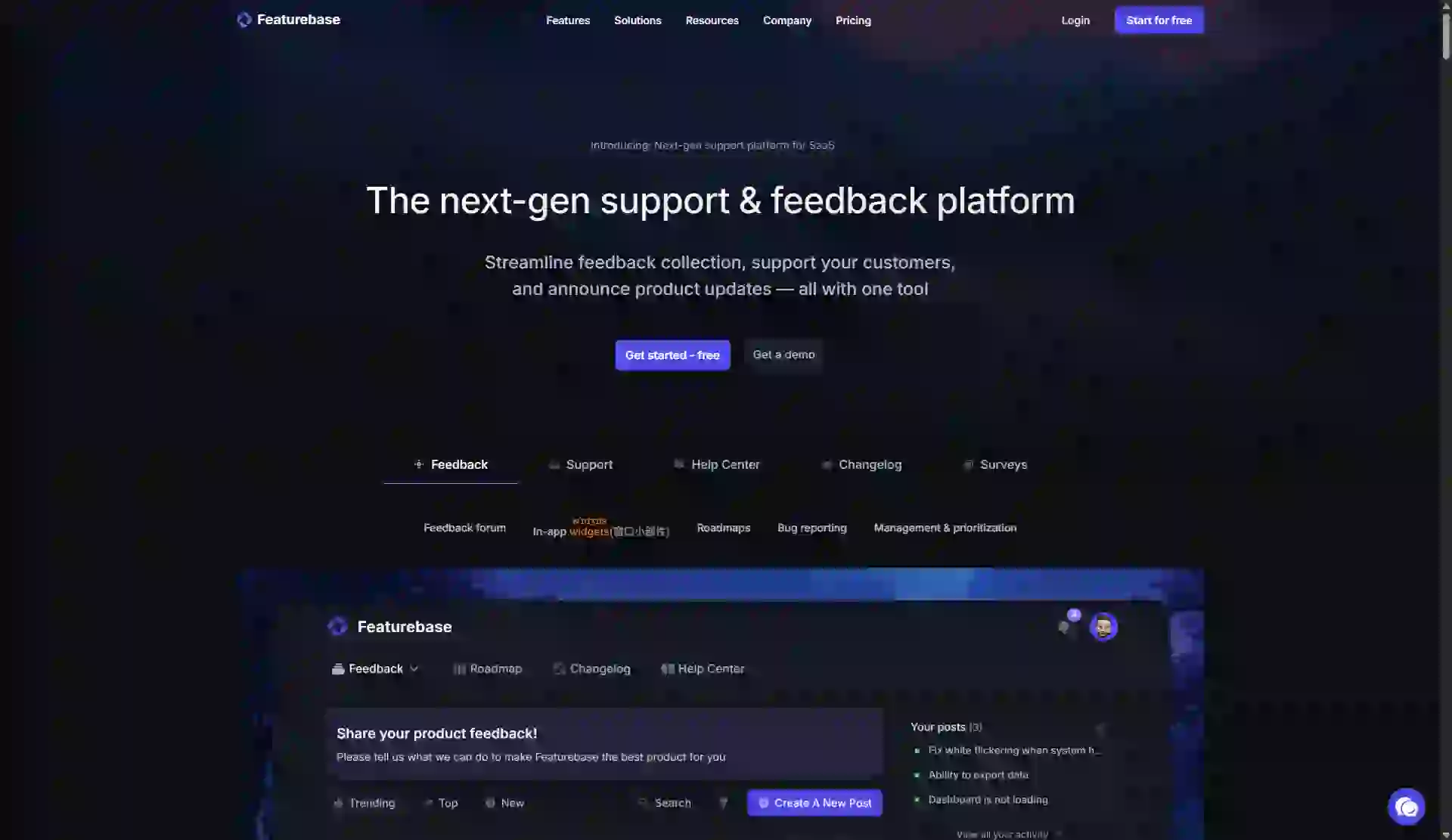
Featurebase
Featurebase Summary A next-generation platform that unifies user-feedback collection, customer support and product-update publishing, helping product teams efficiently connect users to the roadmap. Features Centralizes scattered user feedback, feature requests and internal ideas into a searchable, vote-enabled public portal. Built-in help center (knowledge base) and announcement board for product updates, reducing support tickets. Powerful analytics dashboard that surfaces high-priority needs and links user feedback to specific feature development. Collects feedback and notifies relevant users through segmentation and automation rules, driving higher engagement. Use Cases Product teams that need a systematic way to gather and analyze user feedback and prioritize features accordingly. Customer-success and support teams looking to cut repetitive tickets by offering a public roadmap and self-service knowledge base. Start-ups or growing companies that want an all-in-one tool to manage user feedback, publish updates and support customers. Drawbacks May be overly complex for teams that only need simple feedback collection or a standalone help center. As a newer platform, it has lower market recognition and a smaller third-party integration ecosystem than some established competitors.

easyapp
easyapp Summary A SwiftUI-based mobile-app template designed to help developers bootstrap and build iOS apps quickly, boosting productivity. Features Production-ready SwiftUI components and screen templates out of the box, eliminating repetitive UI work. Pre-built modules for user authentication, data persistence, and other common features—drop-in or reference. Clean, modern Swift codebase that follows current best practices, making it easy to learn and customize. iOS-only focus that leverages SwiftUI’s declarative syntax for rapid prototyping and development. Use Cases Indie devs or small teams who need to validate product ideas with a fast iOS prototype. New iOS projects that must start with essential features such as login and user profiles. A high-quality reference and learning project for SwiftUI and modern iOS app architecture. Drawbacks iOS-centric stack (Swift + SwiftUI); not suitable for cross-platform requirements. As a template, its design style and architecture may not fit every project’s specific needs.

MkSaaS
MkSaaS Summary A site that delivers modern, customizable SaaS (Software-as-a-Service) product templates and solutions, letting developers spin up new projects in minutes. Features Modern, responsive SaaS front-end templates built on popular stacks such as React and Vue.js. Pre-built core modules—user auth, subscription billing, dashboards—cut repetitive work. Clean code base plus full docs make deep customization and extension straightforward. Sleek, minimalist design focused on UX, giving any product an instantly professional look. Use Cases Solo devs or start-ups who need a PoC or MVP—fast. Enterprises building internal tools or customer-facing services that require user management and subscriptions. Developers looking to study or reference a production-grade SaaS front-end architecture.
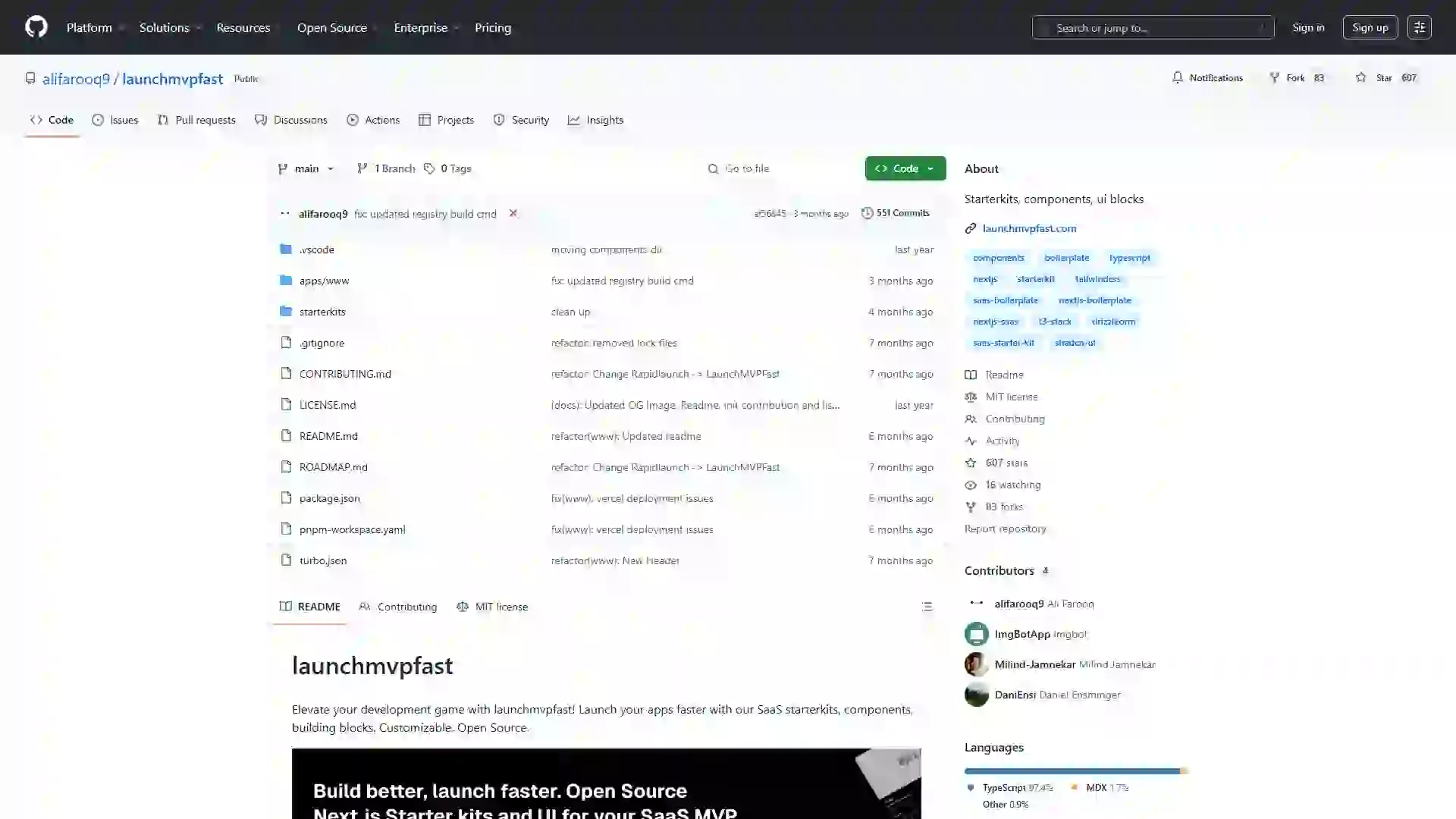
Rapidlaunch
Rapidlaunch Summary A Next.js-based rapid-launch toolkit that delivers high-quality starter kits, reusable components, and UI modules to accelerate the development of modern web applications. Features Multiple carefully-crafted starter kits that let developers scaffold different project architectures in minutes. A large set of plug-and-play UI components and blocks for quickly assembling polished, feature-complete interfaces. Built on the popular Next.js framework for out-of-the-box support of modern web capabilities such as server-side rendering. Clean, open-source code, making it easy to learn from, customize, or integrate directly into your own projects. Use Cases Developers who need to spin up a new project prototype without wasting time on environment setup and boilerplate code. Frontend engineers building admin dashboards, marketing pages, or other common apps who want ready-made UI modules to combine. Teams aiming to standardize project scaffolding and code conventions by using consistent templates to boost productivity. Drawbacks As an open-source project, ongoing component updates and maintenance depend on community contributions. The stack is tightly coupled to Next.js, so teams using other frameworks (Vue, Svelte, etc.) cannot adopt it directly.
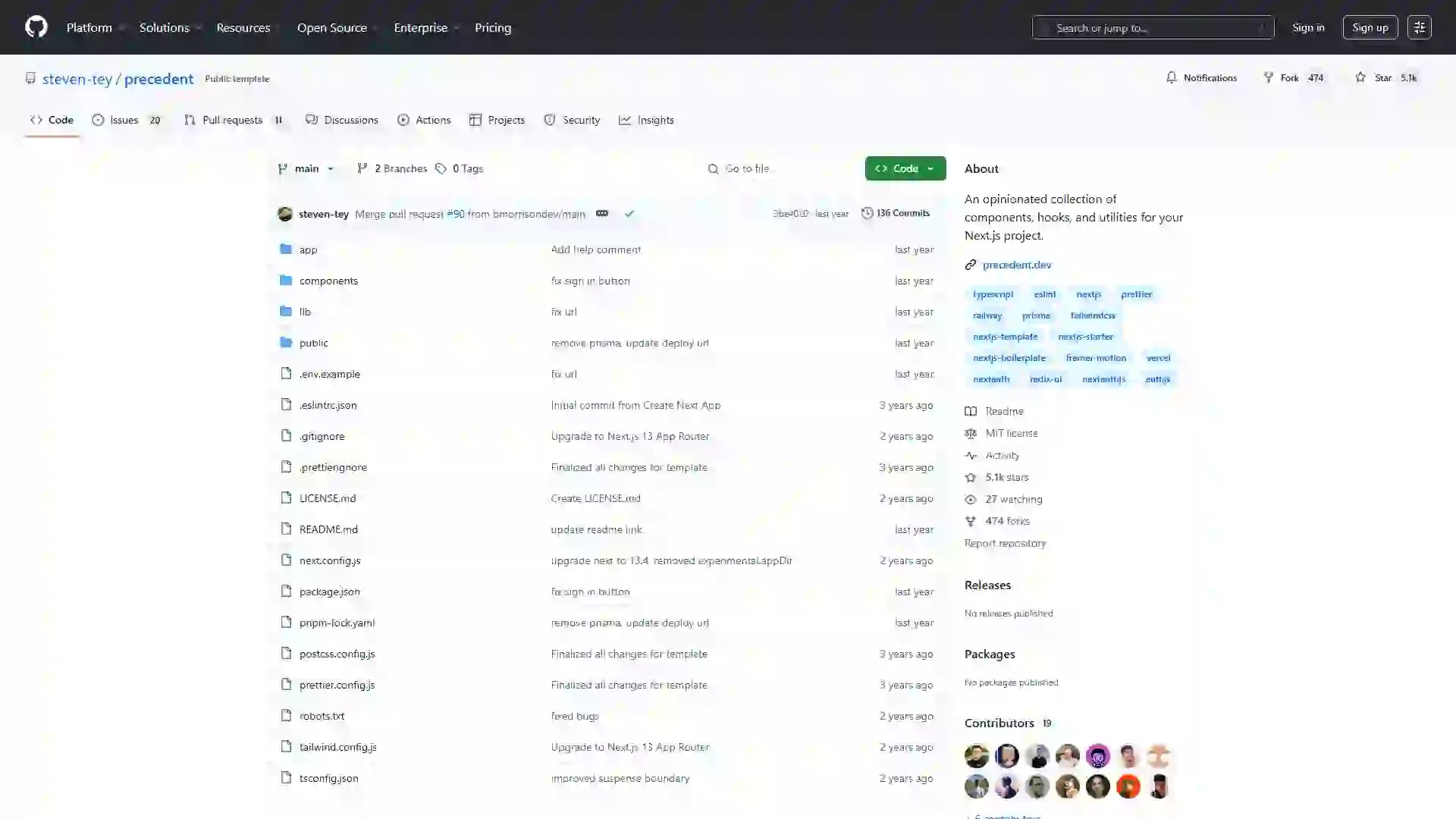
precedent
precedent Summary An open-source library that curates components, hooks, and utilities for Next.js projects, built to speed up the development of modern web applications. Features A collection of carefully crafted UI components—modals, loading states, form elements—ready for drop-in use. Practical custom React Hooks that encapsulate common front-end logic and streamline your workflow. Utility functions deeply integrated with the Next.js App Router to improve developer experience and project structure. Written in TypeScript with complete type definitions for reliable code and faster development. Use Cases Kick-starting a new Next.js project with a set of high-quality, out-of-the-box building blocks. Aligning a team around consistent UI and coding standards by adopting the project as a shared reference and foundation. Shipping modern web apps that demand polished UX by leveraging the provided interactive components and tools. Drawbacks As a personally maintained, opinionated project, its design choices and update roadmap may not suit every team. Beginners may need extra time to grasp the prescribed project structure and design patterns.

Next-JS-Landing-Page-Starter-Template
Next-JS-Landing-Page-Starter-Template Summary A modern, batteries-included landing-page starter built on Next.js 14 and engineered for developers, shipping with a complete toolchain. Features Powered by Next.js 14 with App Router for a first-class DX and top-tier performance. TypeScript + Tailwind CSS 3 for type-safe code and lightning-fast styling. Full code-quality pipeline: ESLint, Prettier, Husky & Lint-Staged pre-wired. VS Code settings and Netlify deploy config ready for instant bootstrap & ship. Use Cases Rapidly spin up a responsive, modern marketing or product landing page. Kick-start a high-standard Next.js project that the team can extend. Build a polished, high-performance company site or personal portfolio. Drawbacks Generic design—layout & styling need heavy customization to match a brand. Dev-centric stack; steep learning curve for non-technical users.
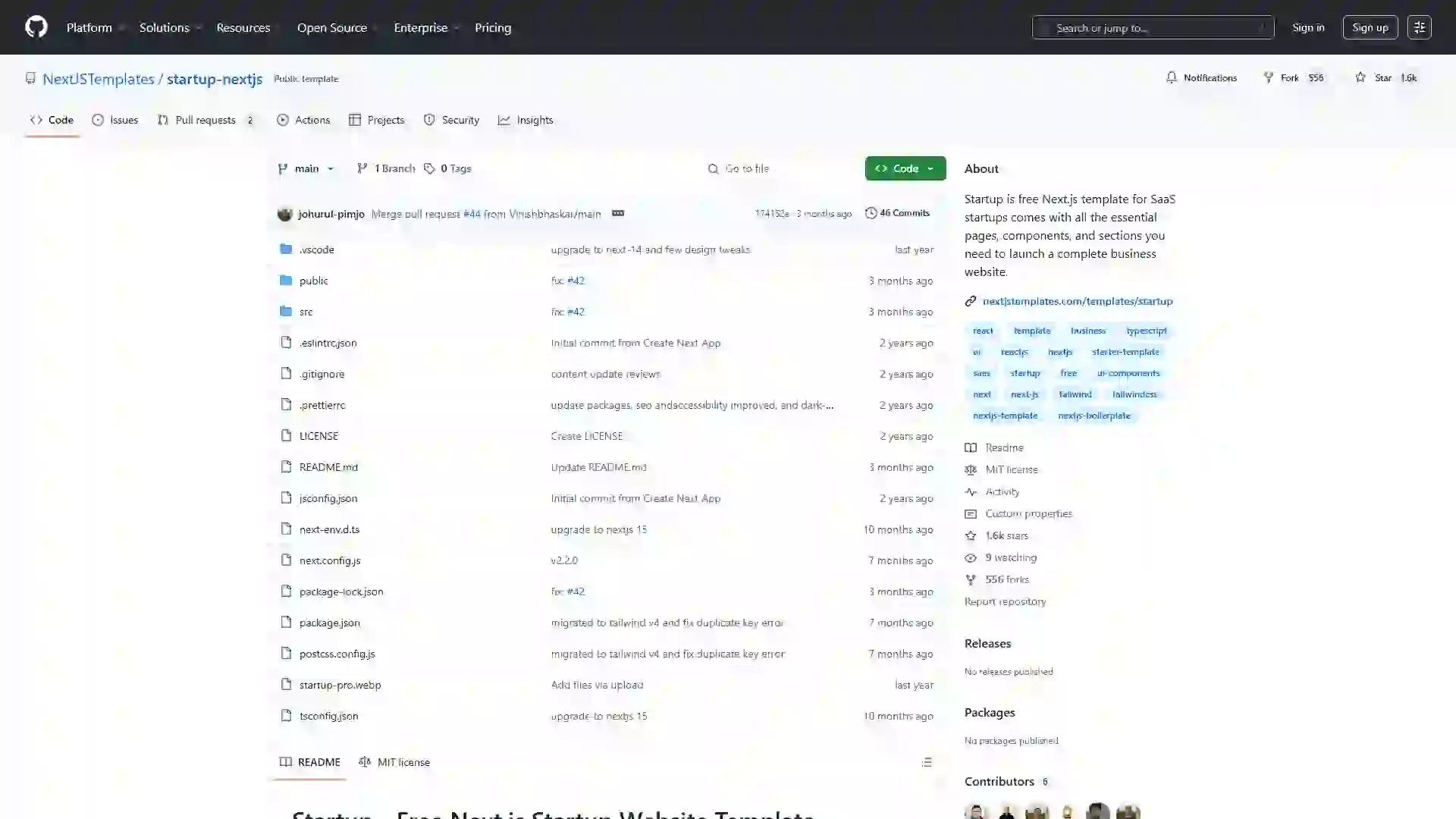
Startup is free Next.js template for SaaS startups comes with all the essential pages, components, and sections you need to launch a complete business website.
Startup Next.js Template Summary A free Next.js template purpose-built for SaaS startups that ships every core page and component you need to launch a full-blown commercial website. Features Built on the modern Next.js framework for top-tier performance, SEO, and developer experience. Includes must-have SaaS pages: Home, Blog, Pricing, About, Contact, and more. Pre-built UI components and layout blocks—navbar, footer, feature showcases—speed up development. Modern, professional, and fully responsive design that looks great on any screen size. 100 % open-source and free to use; customize and extend as deeply as your project demands. Use Cases SaaS or tech startups that need a polished, feature-complete marketing site—fast. Developers or small teams who want a high-quality starter to iterate on, saving time and budget. Anyone launching a content + conversion site (blog, pricing, etc.) to promote a product and acquire users. Drawbacks As a generic template, the design may not align with a unique brand voice without extra customization. Focuses on the front-end; complex back-end logic or user-management systems must be integrated separately.
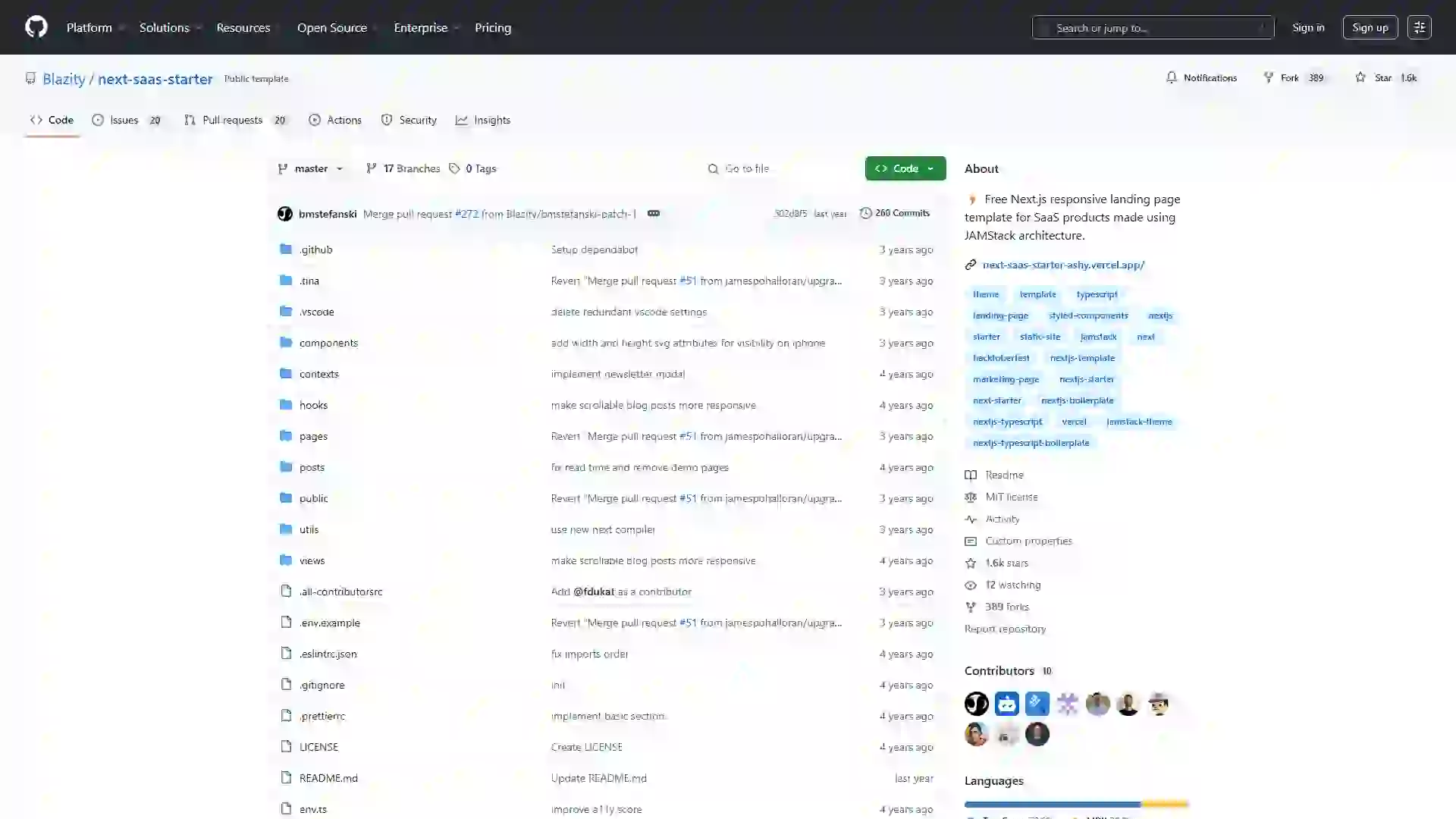
next-saas-starter
next-saas-starter Summary A free, responsive SaaS landing-page starter built with Next.js and the JAMstack. It helps developers ship faster by providing a ready-to-go foundation. Features Built on the modern Next.js framework with server-side rendering for excellent SEO and performance. JAMstack-powered static pre-rendering delivers high security, easy scaling and blazing-fast load times. Fully responsive design guarantees a great browsing experience on any device. Tailwind CSS is pre-configured, enabling highly customisable UI tweaks with minimal effort. Ships with core SaaS components: navigation, hero, feature showcase, pricing table and footer. Use Cases Start-ups or indie hackers who need a polished marketing site for their SaaS product—fast. Developers looking for a modern, high-performance Next.js boilerplate to kick-start a project. Teams that want to follow JAMstack best practices and deploy a static, low-maintenance web app. Limitations As a starter template, functionality is intentionally minimal; complex business logic must be added by the developer. Focuses on the front-end only; a full SaaS backend (auth, payments, etc.) requires separate integration.
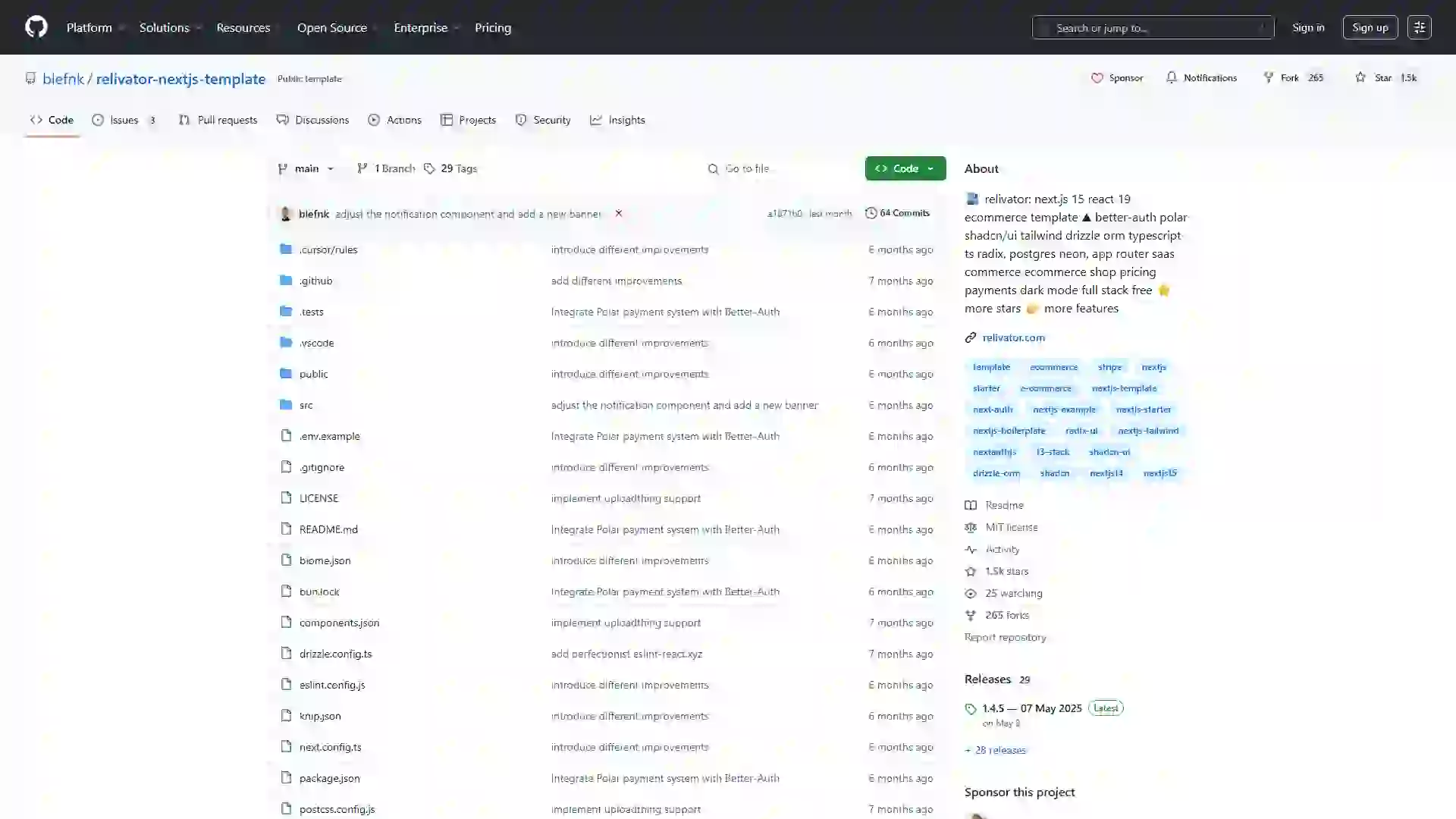
relivator-nextjs-template
relivator-nextjs-template Summary A modern, feature-rich full-stack e-commerce SaaS starter built with Next.js 15 and React 19, pre-wired with authentication, payments, database, and all other mission-critical modules. Features Powered by the latest Next.js 15 App Router and React 19 for a modern DX and top-tier performance. Curated stack out of the box: Better-Auth, Polar (payments), Shadcn/ui, Drizzle ORM, and more. Complete e-commerce modules—product showcase, cart, checkout, payment integration, and pricing pages. Dark-mode support plus highly-customizable styling with Tailwind CSS. Written in TypeScript for end-to-end type safety and long-term maintainability. Use Cases Ship a production-ready modern e-commerce or SaaS MVP in record time. Reference architecture for teams adopting a React/Next.js full-stack approach with minimal integration effort. Build an online store or service platform with user management, payments, and product administration. Drawbacks High stack integration can feel overwhelming for newcomers. Rich feature set may be overkill for ultra-simple projects.
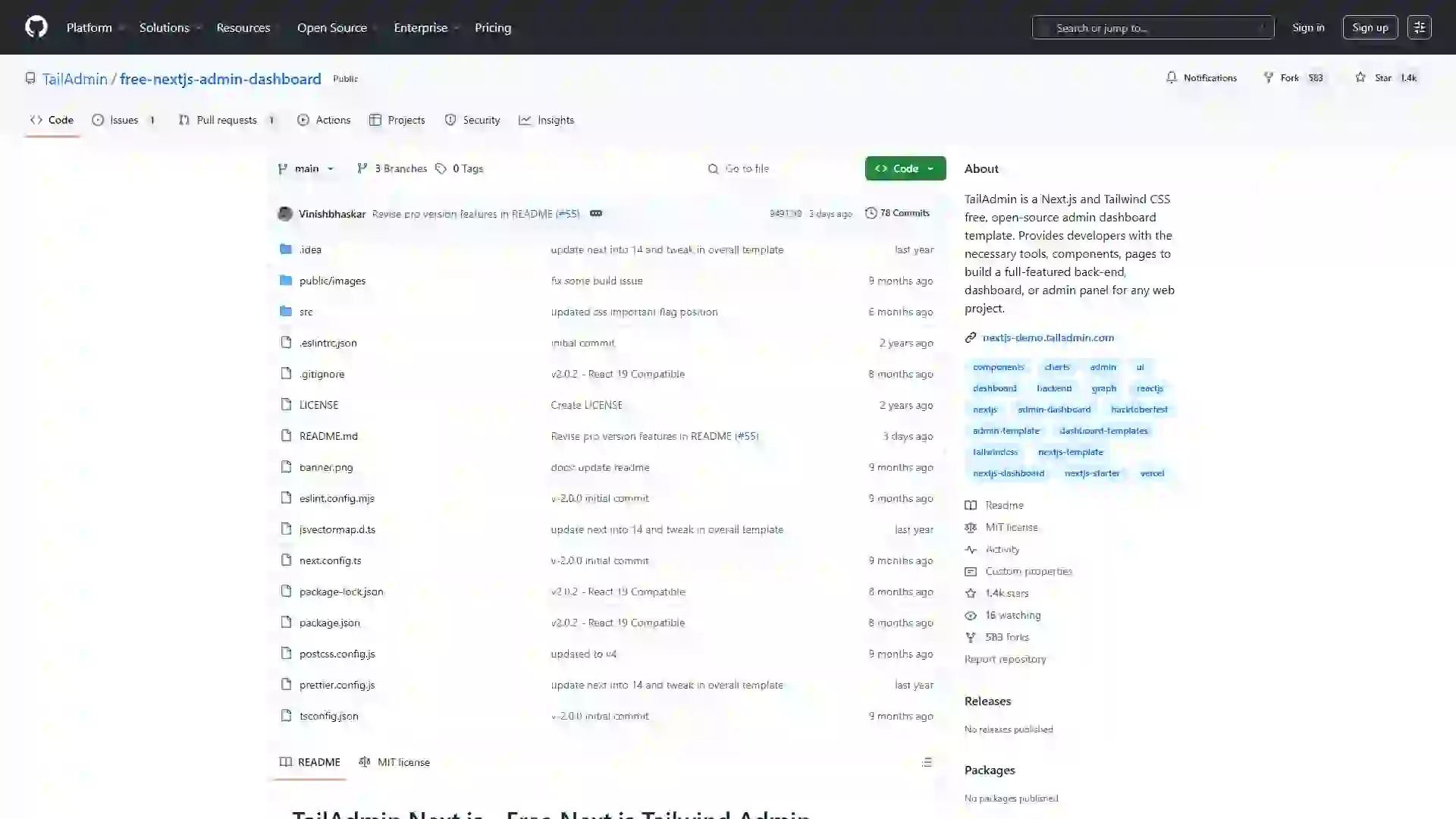
free-nextjs-admin-dashboard
free-nextjs-admin-dashboard Summary A free, open-source admin dashboard template built with Next.js and Tailwind CSS. It ships with a rich set of components and pages to help developers spin up fully-featured back-office systems in no time. Features Modern stack: built on Next.js and styled with Tailwind CSS for top performance and developer experience. Ready-to-use pages & UI components—dashboards, charts, tables, forms and more. Completely free and open-source; download, modify and use in any commercial or personal project without restrictions. Responsive design that looks great from desktop to mobile. Clean, well-organized codebase for easy customization and extension. Use Cases Rapidly build admin panels, analytics dashboards or CMS back-ends for web apps. Perfect starter template and reference for learning real-world Next.js + Tailwind CSS development. Prototype quickly for start-ups or solo devs—skip the boilerplate and focus on product. Drawbacks Being a free template, it may lack advanced features or enterprise-grade support. UI and functionality are intentionally basic; complex projects will require additional customization effort.
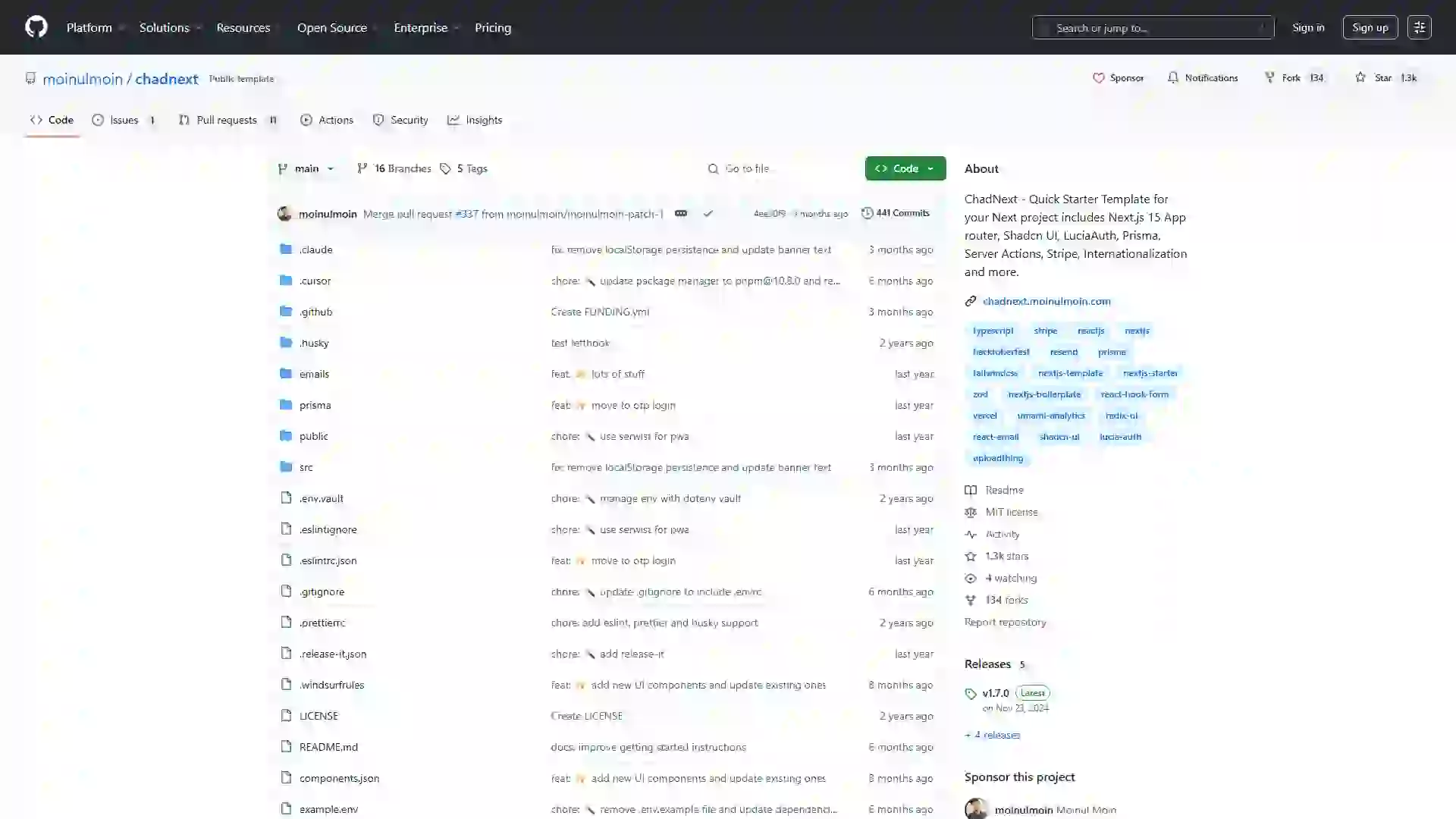
chadnext
chadnext Summary A batteries-included Next.js 15 full-stack starter that wires up modern UI components, auth, database, and payments so you can ship new projects fast. Features Built on Next.js 15 App Router with the latest React features and server-side rendering. Shadcn/ui component library baked in for beautiful, theme-ready UI out of the box. LuciaAuth for secure, flexible session management. Prisma ORM for type-safe queries and painless migrations. Stripe pre-wired for one-off or subscription payments. Use-cases Kick-start a modern full-stack web app with a complete user system. Launch an i18n-ready SaaS or commercial site that needs payments and a polished UI. Skip repetitive boilerplate with a pre-tuned, production-ready foundation for solo devs or teams. Drawbacks Stack choices are opinionated—switching UI libs or ORMs takes work. Rich feature set can feel heavy for ultra-simple projects; expect a steeper learning curve.
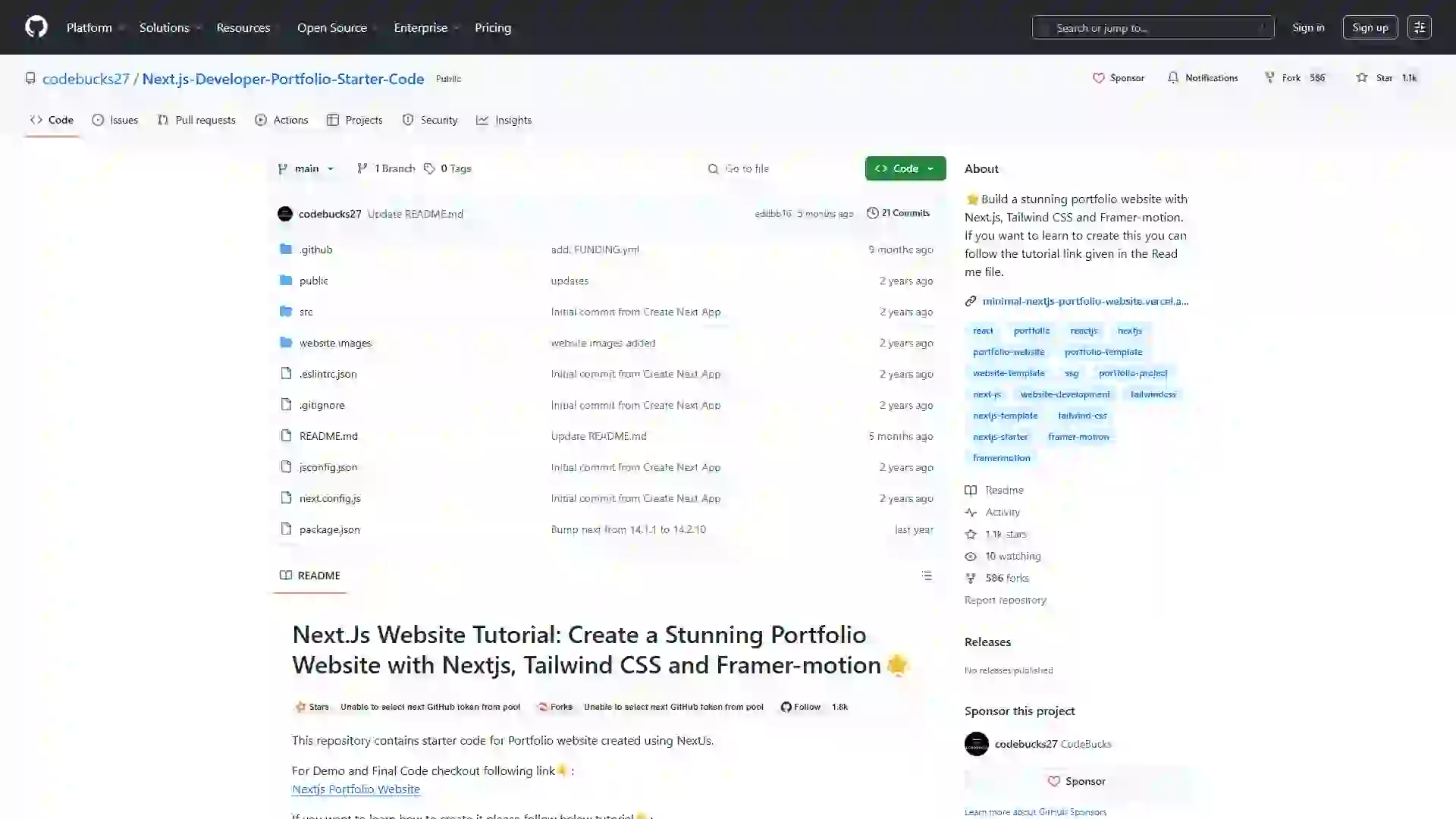
Next.js-Developer-Portfolio-Starter-Code
Next.js-Developer-Portfolio-Starter-Code Summary An open-source boilerplate for a modern developer portfolio website built with Next.js, Tailwind CSS, and Framer Motion. Features Powered by Next.js for excellent SEO, server-side rendering, and fast page loads. Styled with Tailwind CSS for highly customizable, responsive layouts. Framer Motion integration provides smooth, eye-catching animations for page elements and transitions. Includes core portfolio pages and components such as project showcase, skills overview, and contact form. Use Cases Ideal for front-end or full-stack developers who need a quick, professional, and cutting-edge personal showcase site. Great reference or practice project for developers learning to combine Next.js, Tailwind CSS, and Framer Motion in real-world scenarios. Drawbacks As an entry-level template, functionality and design are relatively basic; deeper customization requires solid development skills. Tied to a specific tech stack—developers unfamiliar with these frameworks will face an additional learning curve.

Naive UI Pro
Naive UI Pro Summary Naive UI Pro is an admin template for mid-to-back-office systems, built on a modern stack (Vite, Vue 3, TypeScript). Its core value lies in an original, high-cohesion & low-coupling architecture that keeps the codebase crystal-clear and every feature module fully independent, dramatically improving maintainability and extensibility while offering an excellent developer experience. Features Original high-cohesion & low-coupling architecture Unlike most templates on the market, careful modular design completely decouples functionalities, making the code easy to read, maintain, understand and extend. Modern tech stack Powered by Vite, Vue 3 and TypeScript for lightning-fast dev-server start-up, first-class type safety and a superb DX. Highly extensible Thanks to the architecture, new features can be added or existing modules replaced without side effects—ideal for heavily customized projects. Use Cases Enterprise mid/back-office systems Perfect for quickly bootstrapping complex admin panels, CMSs or data-analytics platforms that require long-term maintenance and continuous iteration. Vue 3 learning & reference An excellent study specimen for developers who want to master modern Vue 3 project architecture, modular design and best practices. Drawbacks As a personal open-source project, official support and long-term maintenance may be less guaranteed than team-backed alternatives. Community ecosystem and ready-made plugins are relatively smaller compared with mainstream templates such as Ant Design Pro.

DirEasy
DirEasy Summary DirEasy is a full-stack directory-website template engineered for developers and founders who need to ship a modern, responsive, revenue-ready directory in record time. Every core feature is baked in, slashing development overhead to near zero. Features Feature-complete out of the box Listing submission, faceted search & filtering, user reviews and ratings—everything required for a production-grade directory is included, so you can skip the grind of building from scratch. Modern, responsive design Built with contemporary design language and fully responsive, the template delivers a consistent, polished experience from desktop to mobile. Built-in monetization Pre-configured revenue levers—paid listings, membership tiers, and ad-slot integrations—let you start earning on day one. Use Cases Rapid launch & idea validation Entrepreneurs can compress months of dev work into days, focusing on content and market validation instead of code. Service & resource hubs Ideal for local-business directories, curated tool libraries, or professional-network portals that aggregate and showcase valuable information. Drawbacks Template-driven aesthetics can lead to look-alike sites with limited visual differentiation. Deep customization or complex feature extensions may require solid technical chops.